Key takeaways
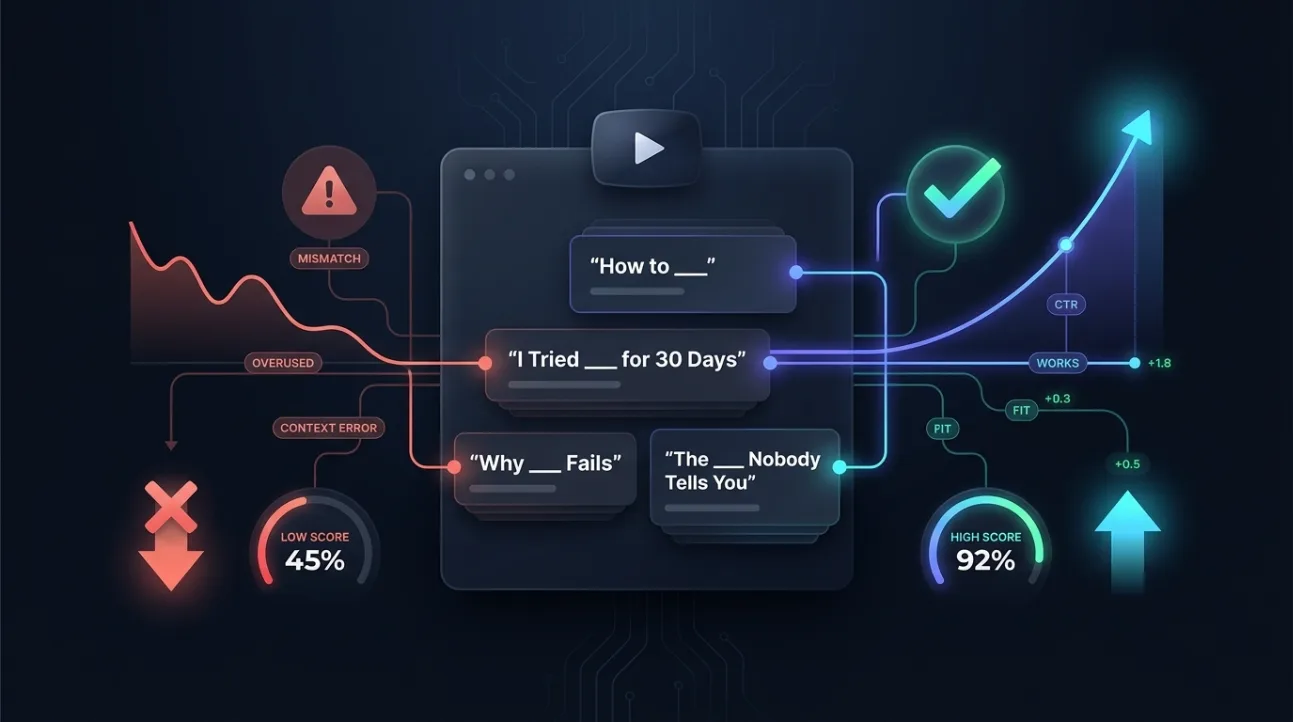
- Every YouTube title formula promises a specific benefit — match that promise to your video’s actual content or risk losing trust.
- Formulas fail when overused in a niche, making them invisible to viewers who’ve learned to ignore them.
- Even the most effective title template can backfire if it doesn’t align with the video’s core value or audience expectations.
- Use formulas as starting points, not guarantees — test variations and measure what resonates with your specific viewers.
- When a formula feels stale, pivot to specificity, curiosity, or emotional resonance to stand out.
YouTube Title Formula: “How to [Solve Problem] in [Time]”
This formula works because it promises a clear, time-bound solution to a specific pain point — viewers know exactly what they’ll gain and how long it’ll take. It’s ideal for tutorials, productivity, and DIY content where efficiency matters.
Example: “How to Remove Background Noise in Audacity in 3 Minutes” targets editors who need a quick fix. The promise is speed and simplicity — if the video delivers, viewers feel satisfied and are more likely to subscribe.
But this formula fails when every video in a niche uses it. Viewers stop clicking because they’ve seen too many “in 5 minutes” videos that overpromise or underdeliver. Saturation makes the formula invisible — it blends into the noise instead of standing out.
Always ask: Does this video actually solve the problem in the time claimed? If not, the title becomes misleading, and viewers bounce — hurting retention and future CTR. Use this formula only when you can genuinely deliver on the time and outcome.
YouTube Title Formula: “You Won’t Believe What Happened When [Event]”
This hook leverages surprise and curiosity — it promises an unexpected twist or outcome that viewers can’t predict. It’s effective for reaction videos, experiments, or real-life stories where the result defies expectations.
Example: “You Won’t Believe What Happened When I Tried to Cook a 3-Michelin-Star Recipe at Home” sets up a contrast between high-end cuisine and amateur execution. The promise is entertainment through failure or surprise — viewers click to see the outcome.
But this formula fails when it’s used for mundane or predictable content. If the video doesn’t deliver a genuine twist, viewers feel tricked. Overuse in niches like gaming or vlogs makes it feel cheap — viewers scroll past because they’ve seen too many “you won’t believe” titles that lead to nothing.
It also backfires if the event is too vague. “You Won’t Believe What Happened” without context is clickbait — and YouTube’s systems and viewers penalize deceptive titles. Always anchor the hook to a real, specific event that justifies the surprise.
YouTube Title Formula: “The [Number] [Thing] That [Result]”
This formula promises a curated list of items that lead to a specific outcome — it’s structured, scannable, and implies authority. It works well for reviews, comparisons, and “best of” content where viewers want to quickly identify top options.
Example: “The 5 Laptops That Last 5+ Years (Tested in 2024)” tells viewers exactly what to expect — a ranked list of durable laptops, verified by testing. The promise is reliability and research-backed recommendations.
But this formula fails when the number is arbitrary or the result is exaggerated. “The 7 Secrets That Will Make You Rich” feels hollow if the secrets are generic or the outcome is unrealistic. Saturation in niches like tech or finance makes viewers skeptical — they’ve seen too many “top 10” lists that recycle the same items.
Always ensure the number matches the content and the result is achievable. If you can’t back up the claim, the title damages credibility. Use this formula for genuinely useful, well-researched lists — not as a lazy template.
YouTube Title Formula: “I Tried [Trend] So You Don’t Have To”
This formula positions the creator as a tester or guinea pig — it promises to save viewers time, money, or embarrassment by sharing the outcome of an experiment. It’s ideal for trend reviews, product tests, and “don’t waste your money” content.
Example: “I Tried the Viral $100 Skincare Routine So You Don’t Have To” sets up a clear value proposition: the creator did the work, viewers get the verdict. The promise is efficiency and risk reduction — viewers click to avoid wasting their own time or money.
But this formula fails when the creator doesn’t actually try the thing — or when the outcome is obvious. “I Tried the Viral TikTok Dance So You Don’t Have To” is pointless if the dance is easy or the result is predictable. Saturation in lifestyle and review niches makes viewers question authenticity — they’ve seen too many “I tried” videos that feel staged or insincere.
Always deliver genuine, honest results. If you didn’t actually test the product or trend, the title is misleading. Use this formula only when you can provide a real, useful verdict — not as a way to ride a trend without substance.
YouTube Title Formula: “The [Mistake] Everyone Makes (And How to Fix It)”
This formula targets a common error and offers a solution — it promises to correct a widespread problem, making viewers feel they’re learning something valuable. It’s effective for educational, how-to, and troubleshooting content.
Example: “The Editing Mistake Everyone Makes (And How to Fix It in Premiere Pro)” speaks directly to editors who’ve struggled with a specific issue. The promise is correction and improvement — viewers click to avoid a common pitfall.
But this formula fails when the “mistake” is too niche or not actually common. “The Mistake Everyone Makes When Baking Sourdough” won’t work if most viewers don’t bake sourdough — or if the mistake is obscure. Saturation in tutorial niches makes viewers immune — they’ve seen too many “everyone makes this mistake” titles that don’t apply to them.
Always validate that the mistake is truly widespread. If it’s not, the title feels irrelevant. Use this formula for genuinely universal errors — not as a way to force a problem where none exists.
When the Obvious Formula Is the Wrong Choice
Sometimes, the most obvious title formula is the worst choice — especially when the video’s value isn’t about solving a problem, revealing a secret, or testing a trend. For example, a reflective, emotional story about a personal journey doesn’t benefit from a “how to” or “you won’t believe” hook. It needs a title that matches its tone and intent.
Consider a video about overcoming burnout: “How to Beat Burnout in 7 Days” feels reductive and misleading — burnout isn’t solved in a week. A better title might be “What I Learned After 6 Months of Burnout (And Why It Changed Me)”. It’s honest, specific, and matches the video’s reflective nature — viewers who need that message will click because it resonates, not because it tricks them.
Always ask: What’s the core promise of this video? If it’s emotional resonance, curiosity, or reflection — don’t force a formula that promises speed, shock, or lists. Match the title to the video’s true value, even if it means breaking the mold.
For more guidance on aligning your title with your video’s promise, try our free YouTube thumbnail and title analysis tool — it evaluates how well your title matches viewer intent and suggests improvements.
Why Formulas Stop Working in Saturated Niches
Formulas become ineffective when they’re overused because viewers develop “title fatigue” — they learn to ignore predictable patterns. If every video in a niche uses the same hook, viewers stop clicking because they’ve seen it too many times. Saturation makes the formula invisible — it no longer stands out.
This happens because viewers are smart and adaptive. They’ve been burned by misleading titles before, so they’ve learned to skip anything that feels like a template. Algorithms also respond to this — if viewers consistently skip a type of title, YouTube may deprioritize it in recommendations.
The solution isn’t to abandon formulas — it’s to adapt them. Add specificity, change the angle, or combine elements. For example, instead of “How to Edit Videos in 5 Minutes”, try “How I Edit My 10-Minute Videos in 5 Minutes (Without Losing Quality)”. The specificity and personal angle make it feel fresh, even if the core formula is the same.
How to Choose the Right Formula for Your Video
Selecting the right title formula starts with understanding your video’s core promise — what will viewers gain by watching? Then, match that promise to a formula that delivers it clearly and honestly. Here’s a step-by-step approach:
- Identify the video’s primary benefit: Is it solving a problem, revealing a secret, testing a trend, or sharing a story?
- Choose a formula that aligns with that benefit: “How to” for solutions, “You Won’t Believe” for surprises, “The [Number]” for lists, etc.
- Test the formula against your niche: Is it overused? If yes, add specificity or a unique angle to stand out.
- Ensure the title matches the video’s content: If it doesn’t, viewers will feel misled — hurting retention and future CTR.
- Measure and iterate: Use YouTube Analytics to see which titles drive the most clicks and watch time — then refine your approach.
Remember, no formula is guaranteed to increase clicks — it’s about matching the right hook to the right audience and content. Test variations, measure results, and adapt based on what your viewers respond to.
Related reading
- vidIQ Thumbnail Tool Alternative That Analyzes Your Existing Thumbnail
- ทางเลือก vidIQ สำหรับวิเคราะห์ thumbnail ที่คุณมีอยู่แล้ว
Frequently Asked Questions
Can I use multiple title formulas in one video?
Yes, but only if they serve the same core promise. For example, “The 3 Mistakes Everyone Makes (And How to Fix Them in 5 Minutes)” combines two formulas — but both support the promise of quick, actionable fixes. Don’t force multiple formulas if they conflict or dilute the message.
What if my video doesn’t fit any formula?
That’s okay — not every video needs a formula. If your content is reflective, emotional, or narrative-driven, prioritize clarity and resonance over structure. A simple, honest title like “Why I Quit My Job to Travel” can be more effective than a forced formula.
How do I know if a formula is overused in my niche?
Search your niche on YouTube and look at the top results. If most titles use the same structure or phrase, it’s saturated. Try adding specificity, a personal angle, or a different hook to stand out — for example, “How I Fixed My Laptop in 3 Minutes (Without a Screwdriver)” adds a unique twist to a common formula.
Should I change my title if it’s not getting clicks?
Yes — but only if you’re sure the video’s content is strong. Test a new title that better matches the video’s promise or audience intent. Use YouTube’s A/B testing tools or manually update the title and monitor performance. Don’t change it just to chase trends — focus on relevance and clarity.
Is it okay to use clickbait titles if they work?
No — deceptive titles hurt long-term growth. If viewers feel tricked, they’ll bounce, dislike, or unsubscribe — which damages your channel’s reputation and algorithmic performance. Always match the title to the video’s actual content, even if it means fewer initial clicks.