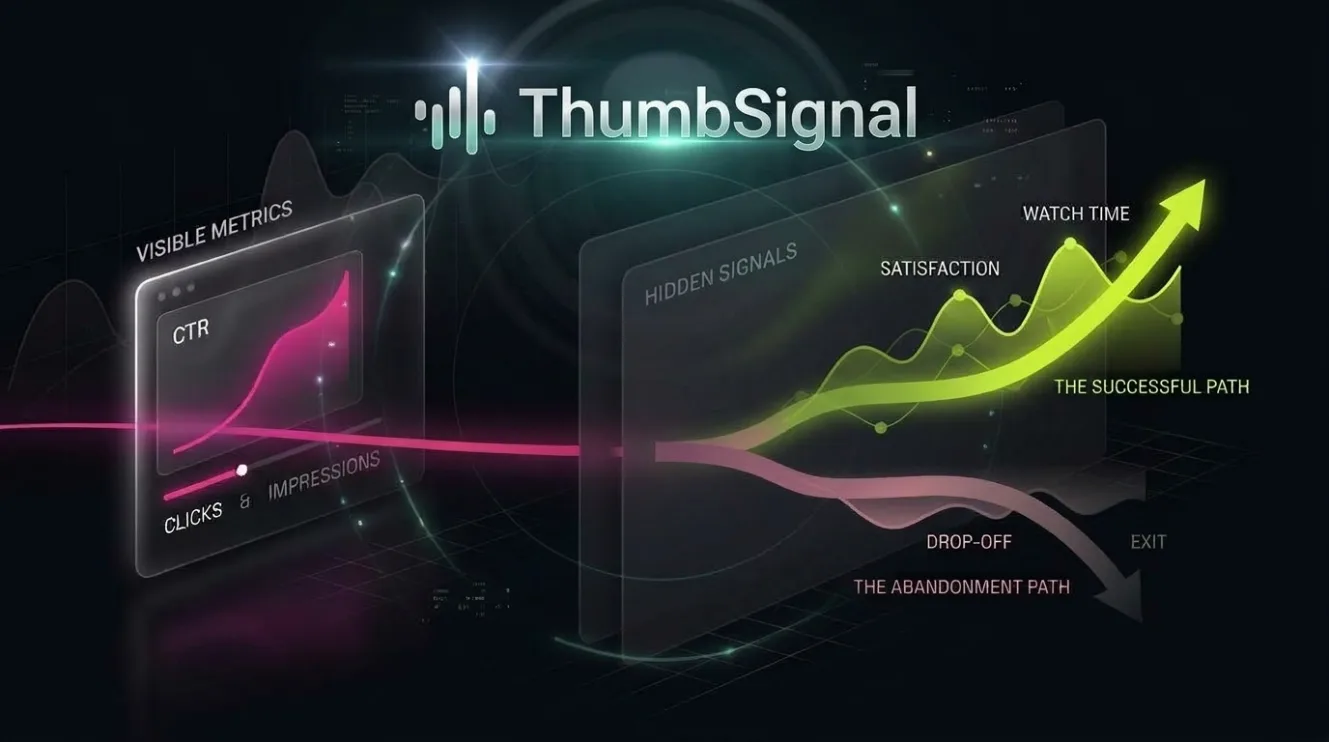
Key Takeaways
- Click satisfaction isn’t visible in YouTube Analytics, but you can infer it from the relationship between CTR and retention.
- High CTR with low retention often signals a packaging problem—not just content.
- Before rewriting your video, check if the thumbnail or title promises something the content doesn’t deliver.
- Low CTR with high retention means your content resonates, but your presentation isn’t grabbing attention.
What Is Click Satisfaction and Why Doesn’t YouTube Show It?
Click satisfaction is an implicit measure of how well your thumbnail and title match what viewers actually find in your video. YouTube doesn’t display it directly because it’s not a raw metric—it’s inferred from observed behavior. It evaluates whether viewers who click feel satisfied or misled after watching.
YouTube avoids making it visible for several reasons. First, because it depends on the viewer’s subjective perception—hard to quantify without bias. Second, because displaying it might tempt creators to artificially optimize content to “please” a score rather than serve their audience. Finally, because YouTube prefers creators to focus on measurable metrics like CTR and retention, which together give a reliable picture of satisfaction.
You’ll never see a “click satisfaction score” in YouTube Studio. But you can deduce it by comparing two public metrics: click-through rate (CTR) and viewer retention. Their interaction reveals whether your packaging attracts the right people—or just the curious.
How CTR and Retention Together Approximate Click Satisfaction
CTR measures how many people click your video after seeing it in suggestions, while retention shows how long they stay after clicking. Together, they form an indirect indicator of click satisfaction. High CTR with high retention means your thumbnail and title attract the right viewers—those who stay because they find the content relevant.
Conversely, high CTR but low retention suggests you’ve drawn viewers with misleading packaging—they click, but leave quickly because the content doesn’t match the promise. This is a strong signal that post-click satisfaction is low, even if YouTube doesn’t call it that.
Here’s a comparison table to visualize possible combinations:
| CTR | Retention | Interpretation |
|---|---|---|
| High | High | High click satisfaction — packaging and content aligned |
| High | Low | Low click satisfaction — misleading or inappropriate packaging |
| Low | High | High click satisfaction — quality content, but ineffective packaging |
| Low | Low | Low click satisfaction — overall content or presentation problem |
The key is to never analyze CTR or retention in isolation. Their interaction reveals what YouTube hides: whether viewers feel satisfied after clicking.
Why High CTR with Low Retention Is Often a Packaging Problem
High CTR with low retention isn’t always a sign your content is bad—it’s often a signal that your packaging (thumbnail and title) doesn’t accurately reflect the content. Viewers click because the thumbnail or title grabs them, but they leave quickly because the content doesn’t deliver on the promise. It’s a “clickbait” problem—even if unintentional.
For example, a thumbnail with a shocked face and a title like “You’ll Never Guess What Happened!” might generate high CTR, but if the video is a calm tutorial on appliance repair, viewers will feel misled. Their post-click satisfaction is low, even if the content is useful.
Packaging is the first impression. If it creates an expectation the content can’t satisfy, viewers will leave—regardless of content quality. That’s why it’s crucial to check whether your thumbnail and title accurately reflect what the video offers, before touching the content itself.
Diagnosis: Check the Promise Before Rewriting the Video
Before modifying the content of a video with high CTR but low retention, first check if the thumbnail or title promises something the content doesn’t deliver. This is often the first step to fix—and it can solve the problem without changing the video itself.
Here’s a procedure to follow:
- Analyze the thumbnail and title: What do they promise? Strong emotion, a revelation, a quick solution?
- Watch the video: Does the content match that promise? Does the viewer find what they expect in the first 10 seconds?
- Test with an external audience: Ask someone to look at the thumbnail and title, then say what they expect to see. Compare with the actual content.
- Modify the packaging if needed: Adjust the thumbnail or title to better reflect the content, or adjust the content to fulfill the promise.
- Relaunch the video with changes and monitor shifts in CTR and retention.
By fixing the packaging before the content, you avoid wasting time rewriting a video that’s already good—but poorly presented. It’s a more efficient and faster way to improve post-click satisfaction.
You can use our free analysis tool to evaluate your thumbnails and titles before publishing—this lets you catch mismatches between promise and content before viewers click.
The Opposite Case: Low CTR but High Retention—What It Means
Low CTR with high retention is a positive signal, but often overlooked. It means the content pleases viewers who click—they stay long because they find the video useful, entertaining, or well-structured. The problem isn’t the content, but the presentation: the thumbnail or title isn’t grabbing attention.
This case is common among creators with quality content but overly plain or vague packaging. For example, a thumbnail with a white background and a technical title like “TCP/IP Protocol Explained” might generate low CTR, even if the video is excellent—because it doesn’t spark emotion or curiosity.
The solution here is to improve the packaging without changing the content. Try making the thumbnail more visual, the title more compelling, or adding a clear promise (e.g., “Understand TCP/IP in 5 Minutes”). The content is already good—you just need to present it better to attract more viewers.
Low CTR with high retention signals you have solid content but lack visual or textual impact. Fixing this can increase your reach without compromising quality.
How to Use Click Satisfaction to Improve Your Videos
Click satisfaction isn’t a score to chase, but an indicator to monitor for aligning your packaging with your content. It helps you understand if you’re attracting the right viewers—those who stay because they find the video relevant, not because they were tricked.
To use it effectively, follow these steps:
- Always compare CTR and retention together—never in isolation.
- If CTR is high but retention is low, check the packaging first.
- If CTR is low but retention is high, improve the packaging without changing the content.
- Test different thumbnails and titles to find the best balance between CTR and retention.
- Use analysis tools to evaluate your thumbnails and titles before publishing.
Click satisfaction is a diagnostic tool, not a goal. It helps you understand why viewers click—and why they stay or leave. Used correctly, it can improve your content and presentation without sacrificing authenticity.
Related reading
- Emotional YouTube Titles: Which Emotions Actually Earn the Click
- Fix Expectation Mismatch on YouTube to Boost Retention
Frequently Asked Questions
What exactly is click satisfaction?
Click satisfaction is an implicit measure of how well your thumbnail and title match what viewers find in your video. It’s not displayed by YouTube, but inferred from the relationship between CTR and retention.
Why doesn’t YouTube show click satisfaction?
YouTube doesn’t show it because it depends on the viewer’s subjective perception, making it hard to quantify. Also, displaying it might tempt creators to artificially optimize content for a score instead of serving their audience.
Does high CTR with low retention mean my content is bad?
Not necessarily. It often means your packaging (thumbnail and title) doesn’t accurately reflect the content. Viewers click because they’re drawn in, but leave because the content doesn’t deliver on the promise.
How do I fix low CTR with high retention?
Focus on packaging: improve the thumbnail to make it more visual, or the title to make it more compelling. The content is already good—you just need to present it better to attract more viewers.
Can I measure click satisfaction with an external tool?
No, because YouTube doesn’t provide a direct score. But you can infer it by comparing CTR and retention, or use analysis tools to evaluate your packaging before publishing.